
From trend research to final artwork.
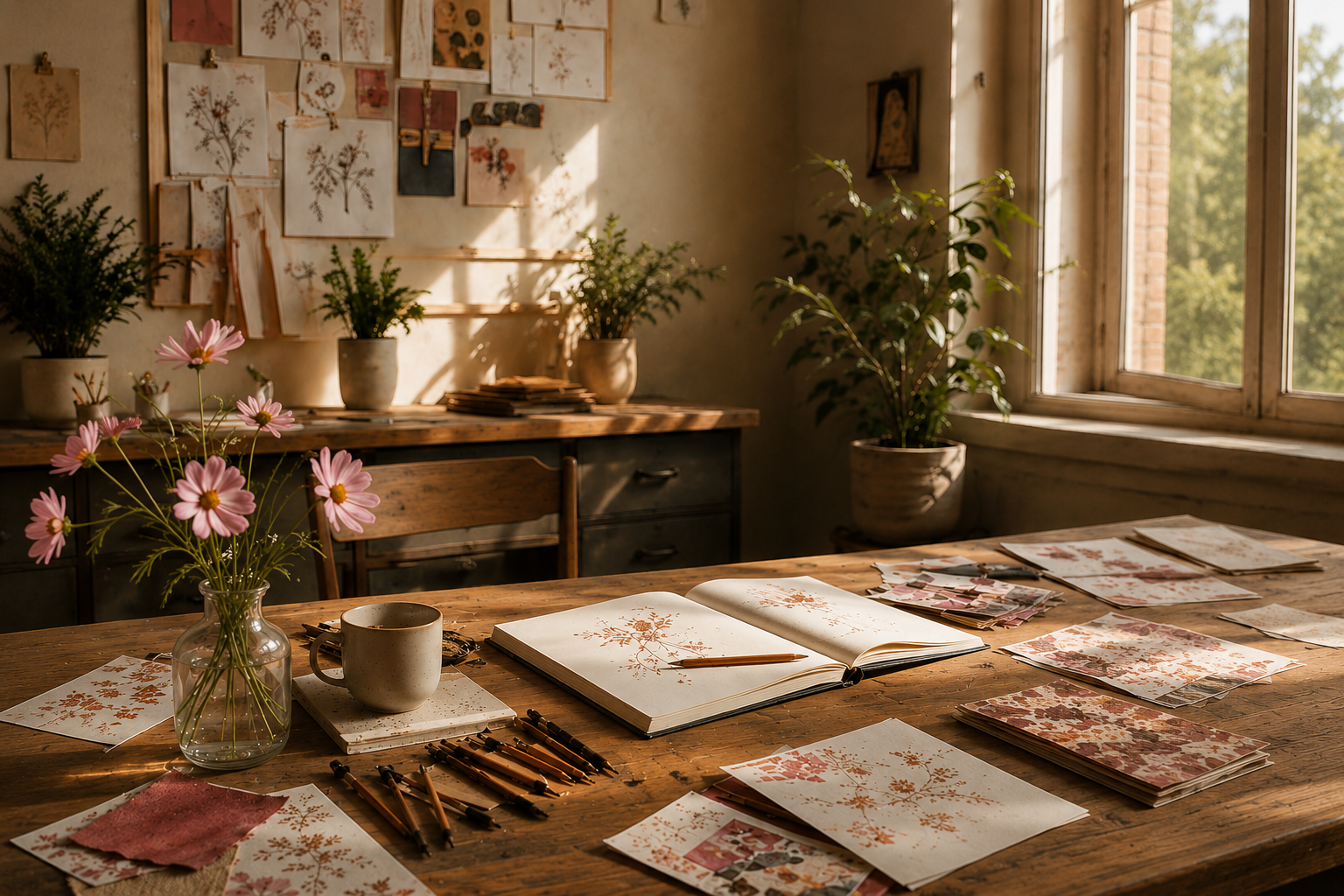
Every textile print tells a story. Before it appears on fabric, it begins as an idea-sometimes inspired by a flower, a color palette, an old photograph, or even a fleeting moment during a walk. This is the process I follow to transform those ideas into original textile prints that are ready for fashion or home furnishings products.
Why every great Textile Print starts with research?
One of the biggest misconceptions about textile design is that it begins with drawing. For me, it begins much earlier-with observation.
Before opening any design software, I spend time understanding the direction of the upcoming season. I explore trend forecasts, fashion collections, runway shows, interior design trends, vintage textiles, and even nature itself. My goal isn’t to copy what already exists but to understand the visual language that people are naturally drawn to.
During this stage, I collect references that resonate with me. These references may include interesting color combinations, unusual floral forms, textures, typography, architecture, or photographs. Every reference becomes a small piece of a much larger creative puzzle.
Research provides direction. It ensures that every print I create feels relevant while still carrying its own personality.
Finding inspiration without copying
One question I’m often asked is:
“Where do you get your ideas?”
The truth is, inspiration is everywhere.
A single flower can inspire a color palette. A vintage wallpaper can influence a composition. A travel photograph might suggest a rhythm of shapes. But inspiration is only the starting point.
Instead of recreating what I see, I study why something feels visually appealing. Is it the balance? The movement? The contrast? The proportions?
I then reinterpret those observations through my own sketches and illustrations. By combining multiple sources of inspiration and adding my own creative decisions, every print becomes an original piece of artwork rather than a copy of an existing design.
For me, originality isn’t about avoiding inspiration-it’s about transforming it using my observation.
Building the Moodboard
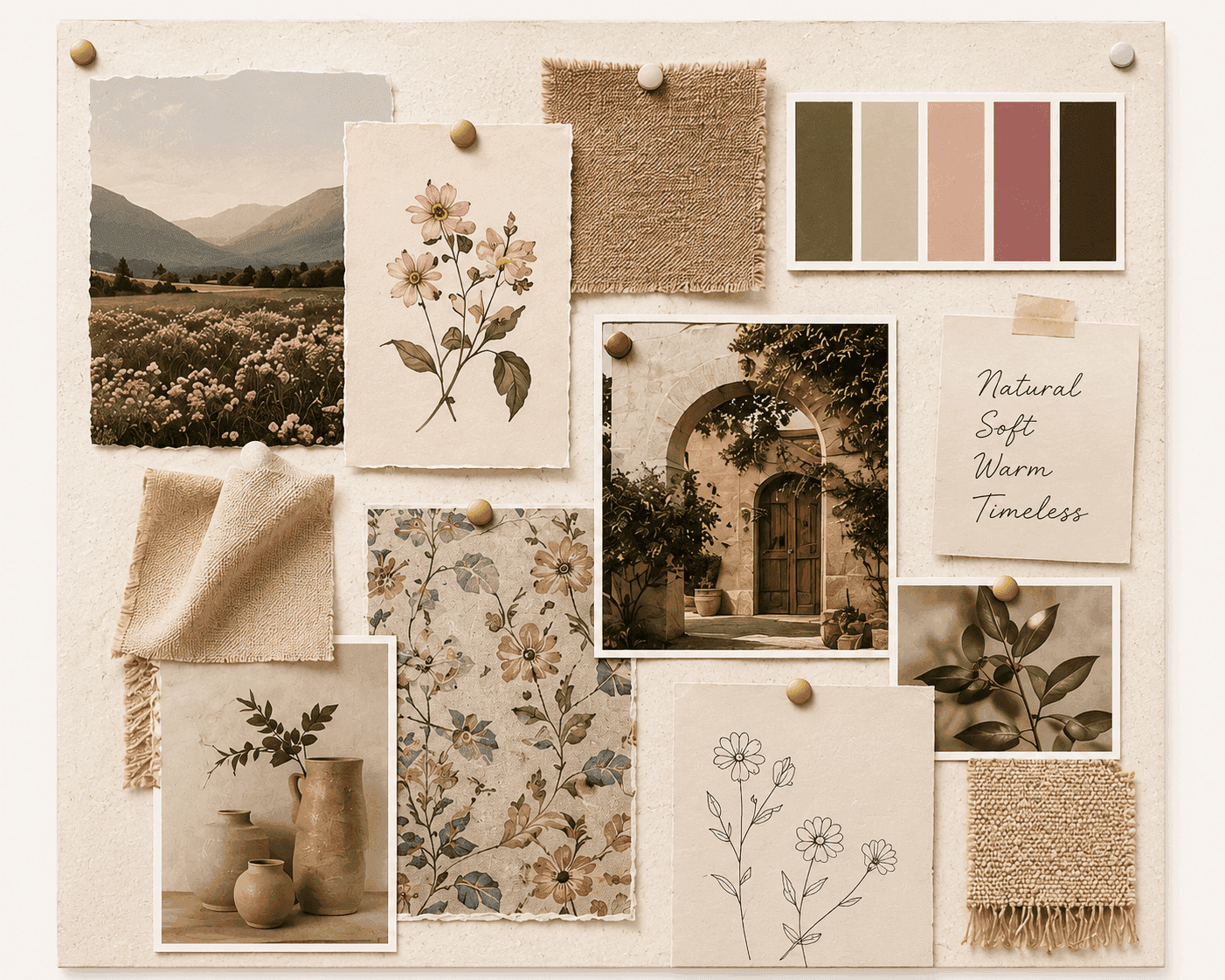
Once I’ve gathered enough references, I create a moodboard. This is where scattered ideas begin to form a clear visual direction.
A moodboard helps me define:
- Overall mood and emotion
- Color palette
- Shapes and motifs
- Textures
- Scale
- Style direction
- Target customer
Some collections feel soft and romantic, while others are bold, playful, or contemporary. Having a moodboard ensures that every design decision supports a consistent creative vision.
It becomes the blueprint for the entire collection.
Sketching ideas on paper
Although most of my final artwork is created digitally, I still enjoy beginning with rough sketches. Sketching allows me to explore freely without worrying about perfection.
I experiment with:
- Floral compositions
- Leaves and botanical forms
- Abstract shapes
- Character illustrations
- Geometric layouts
- Organic line work
These initial sketches are intentionally loose. They allow ideas to evolve naturally before moving into digital refinement.
Many of my strongest prints begin with the simplest pencil drawings.
Creating digital motifs
Once I’m happy with the sketches, I recreate or refine them digitally. This stage involves carefully cleaning the artwork while preserving the handmade character that gives the design warmth and authenticity.
Depending on the project, I may create:
- Hand-drawn florals
- Botanical illustrations
- Abstract motifs
- Graphic elements
- Decorative textures
Each motif is designed as an individual building block that will later become part of a larger textile print. I pay close attention to proportion, balance, and versatility because each motif needs to work beautifully on its own and as part of the overall composition.
Arranging the Artwork Into a seamless repeat
This is where the design truly comes to life. A beautiful illustration doesn’t automatically become a successful textile print. The arrangement of motifs determines how the print flows across fabric. I spend time experimenting with different layouts, adjusting spacing, rotation, scale, and visual rhythm until the composition feels balanced from every direction.
Creating a seamless repeat requires both creativity and precision. The transition between repeat edges should feel invisible, allowing the pattern to continue endlessly without interruption. This stage often involves multiple revisions because even small adjustments can dramatically improve the final result. You should check out my textile prints for understanding this better.
Choosing the right colors
Color has the power to completely transform a design. The same floral artwork can feel fresh and youthful in soft pastels, sophisticated in earthy neutrals, or energetic in vibrant contrasting tones.
Rather than choosing colors based solely on personal preference, I consider:
- Seasonal trends
- Brand identity
- End product
- Customer preferences
- Printing techniques
I also develop multiple colorways whenever possible, allowing the same design to suit different collections or product categories. Exploring color is one of my favorite parts of the process because it often reveals unexpected possibilities.
Visualising the print on products
Before finalising any artwork, I like to see it in context. A print can look beautiful on screen but feel completely different when visualised on a product.
Creating realistic mockups helps me evaluate:
- Scale
- Placement
- Readability
- Commercial appeal
- Overall aesthetic
Seeing the design applied to real products also allows clients to imagine the final outcome much more easily.
It bridges the gap between artwork and finished product.
Refining every detail
Very rarely is the first version the final version. Some prints require subtle adjustments to spacing. Others need improved color harmony or stronger focal points.
Sometimes a single leaf needs repositioning. Sometimes an entire composition needs rebuilding. These refinements may seem minor, but together they elevate the quality of the final artwork.
Great textile design is often the result of patience rather than speed.
What makes a successful textile print
For me, a successful textile print achieves more than visual beauty. It tells a story, evokes emotion, works beautifully on fabric, and reflects the identity of the brand it’s created for.
Most importantly, it feels intentional. Every decision-from research to the final repeat-contributes to that outcome.
As a textile designer, I don’t simply create patterns. I create visual experiences that people wear, live with, and connect to every day. That is what continues to inspire me every time I begin a new project. For building your own collection get in touch. We can work together towards building your desired prints and patterns.
Final thoughts
Every collection begins with curiosity. Some start with a flower. Others begin with a color, a texture, or an unexpected moment of inspiration.
No matter where the journey starts, I enjoy every stage of transforming ideas into original textile prints that combine creativity with thoughtful design. I believe that the strongest prints aren’t just decorative-they communicate a feeling, tell a story, and create lasting connections.
And for me, that’s the most rewarding part of being a textile designer.
Frequently Asked Questions
Depending on the complexity, developing a single textile print can take anywhere from a few days to several weeks, including research, sketching, motif development, repeat creation, and refinements.
I primarily use professional design software for illustration, motif development, and repeat pattern creation, along with digital sketching tools when needed.
Yes. I enjoy developing original prints tailored to a brand’s aesthetic, target audience, and product range.
My inspiration comes from nature, architecture, vintage textiles, travel, art, seasonal trends, and everyday observations.
Trend research helps ensure that a print feels relevant to upcoming seasons while still allowing room for originality and personal creativity.